
Research
Crustal Deformation and Seismic Anisotropy
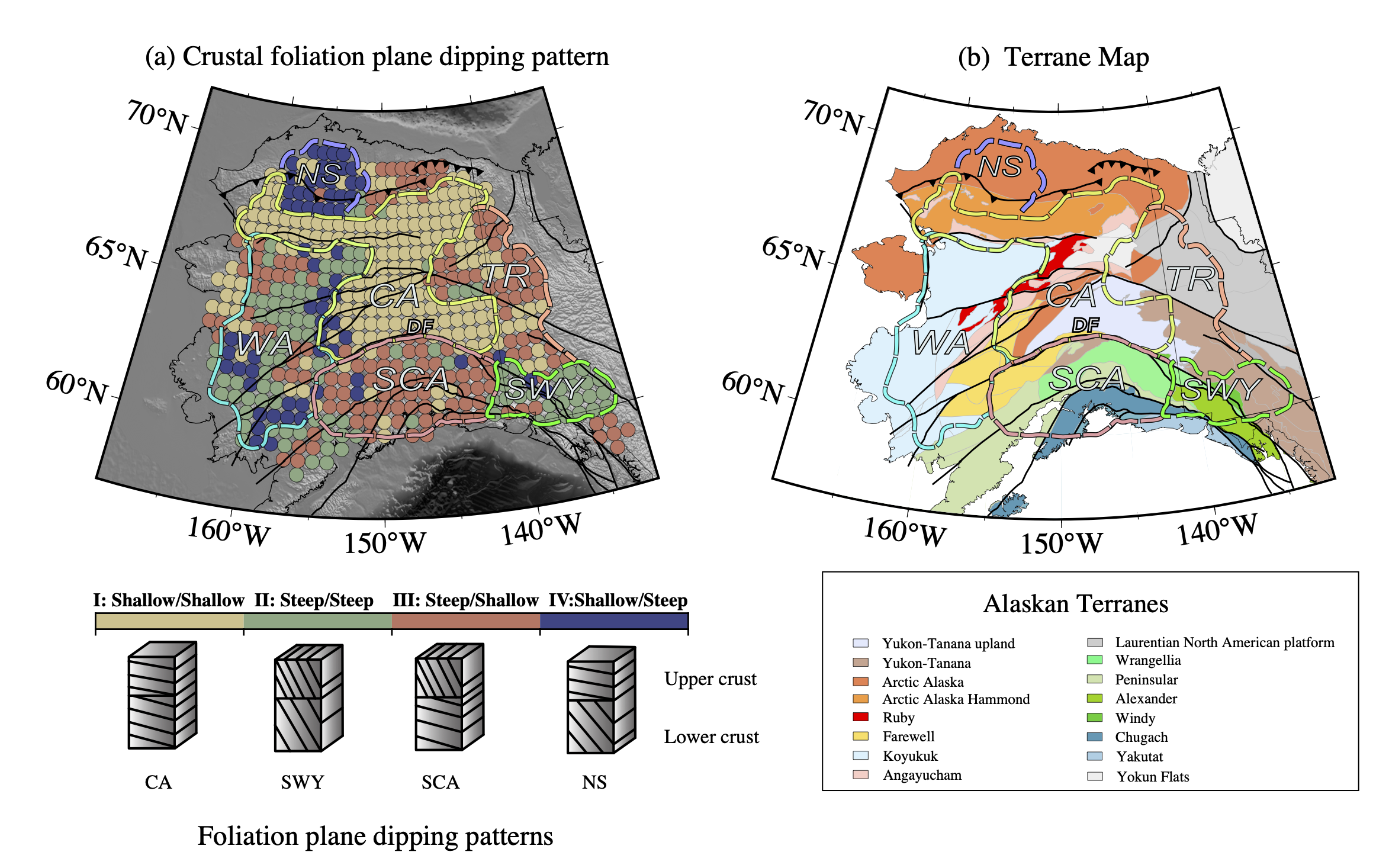
Seismic anisotropy provides valuable insights into crustal deformation processes. In Alaska, seismic observations reveal patterns of anisotropy that help characterize lithospheric deformation and geodynamic evolution.
Seismic Anisotropy at Oceanic Plates and Subduction Zones
2.1 Aleutian Subduction Zone
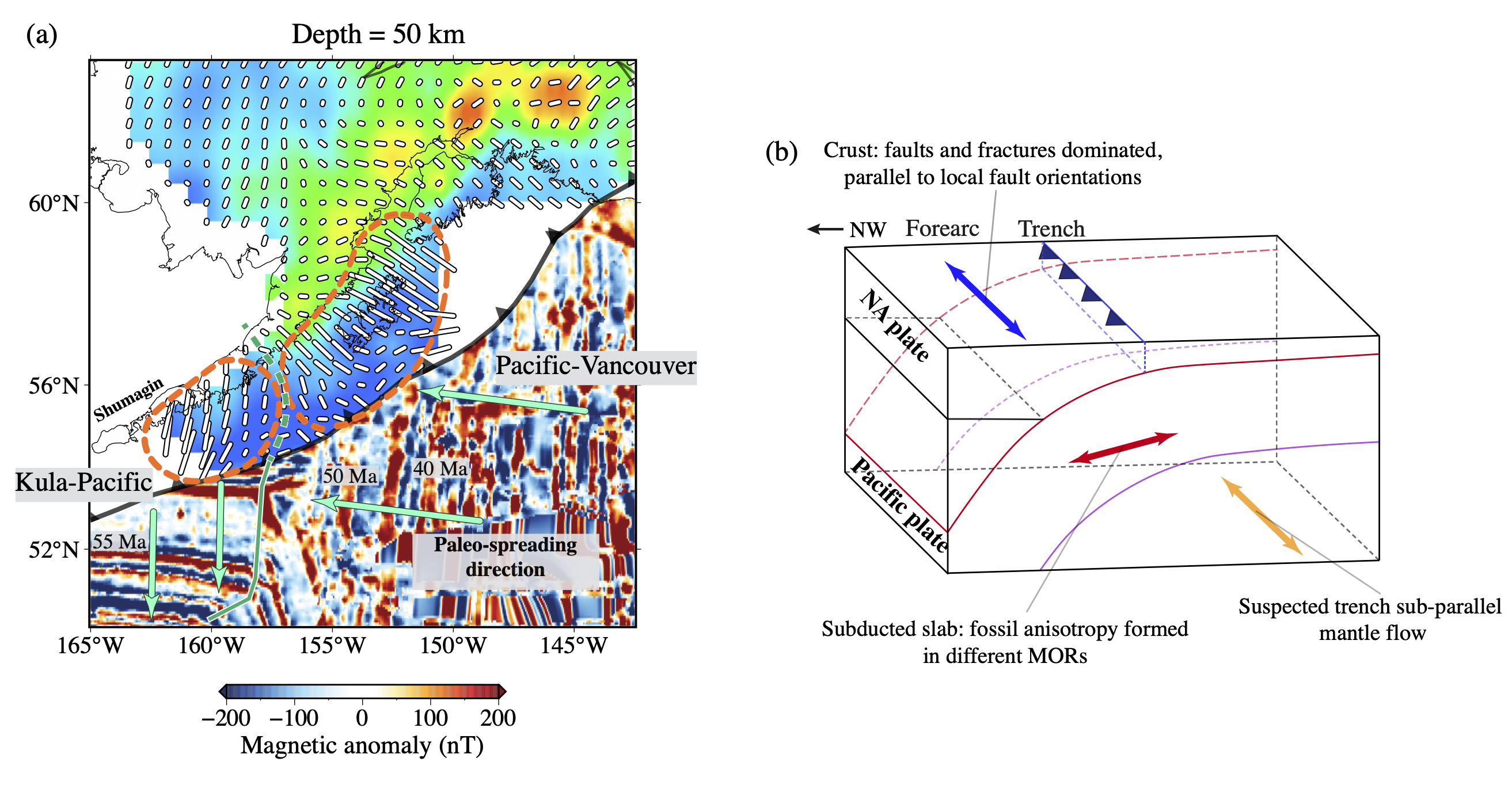
Seismic anisotropy in the Aleutian subduction zone sheds light on mantle flow and slab dynamics. The complex interactions between the subducting slab and the overriding lithosphere influence anisotropic signatures observed in seismic data.
2.2 The Juan de Fuca-Gorda Plates
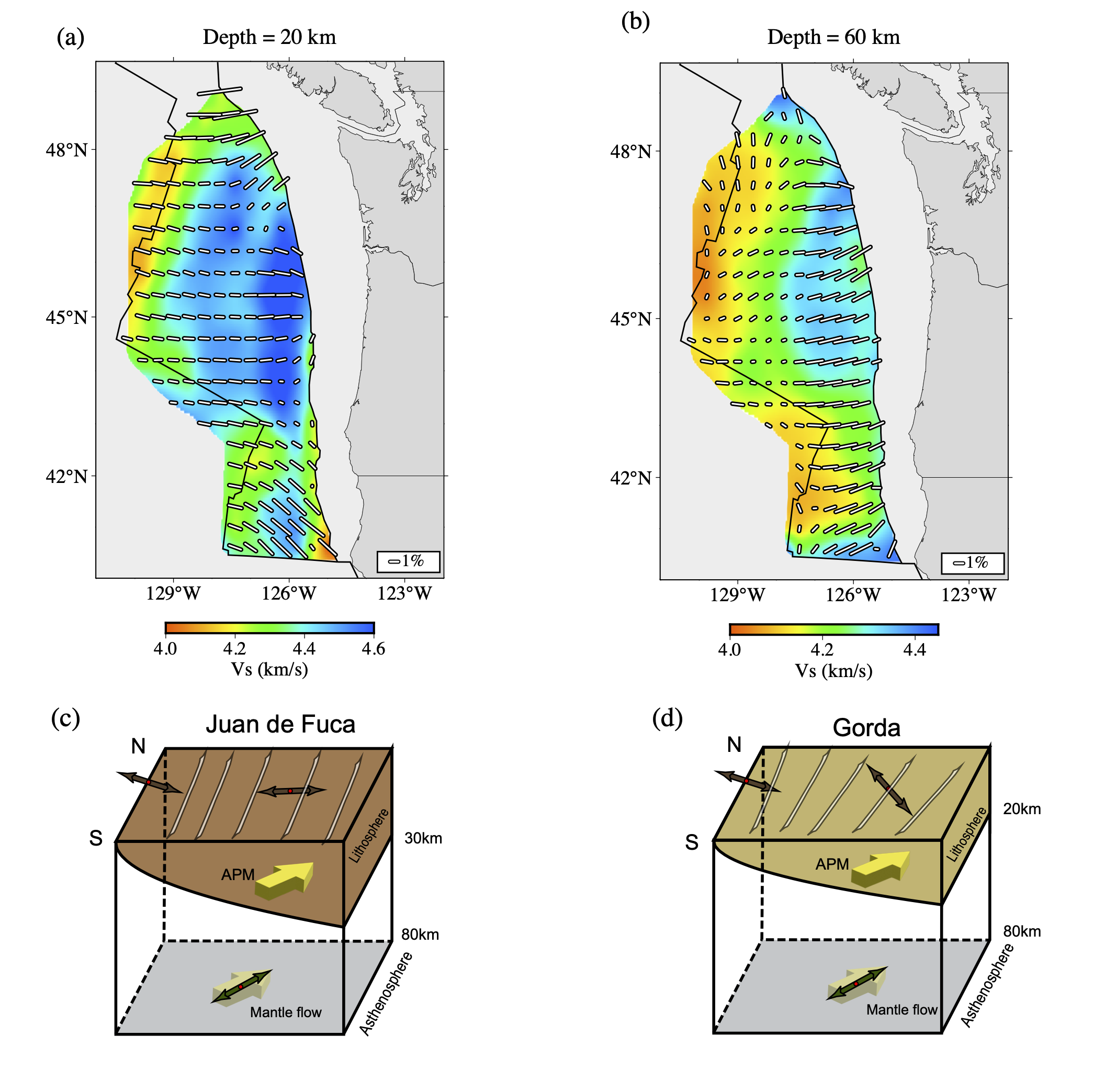
The Juan de Fuca and Gorda plates are characterized by significant seismic anisotropy due to plate bending, hydration, and subduction processes. Understanding these anisotropic patterns helps constrain the stress and deformation history of oceanic plates.
New Methods for Seismic Imaging
3.1 Three-Station Ambient Noise Interferometry in Alaska/Aleutian
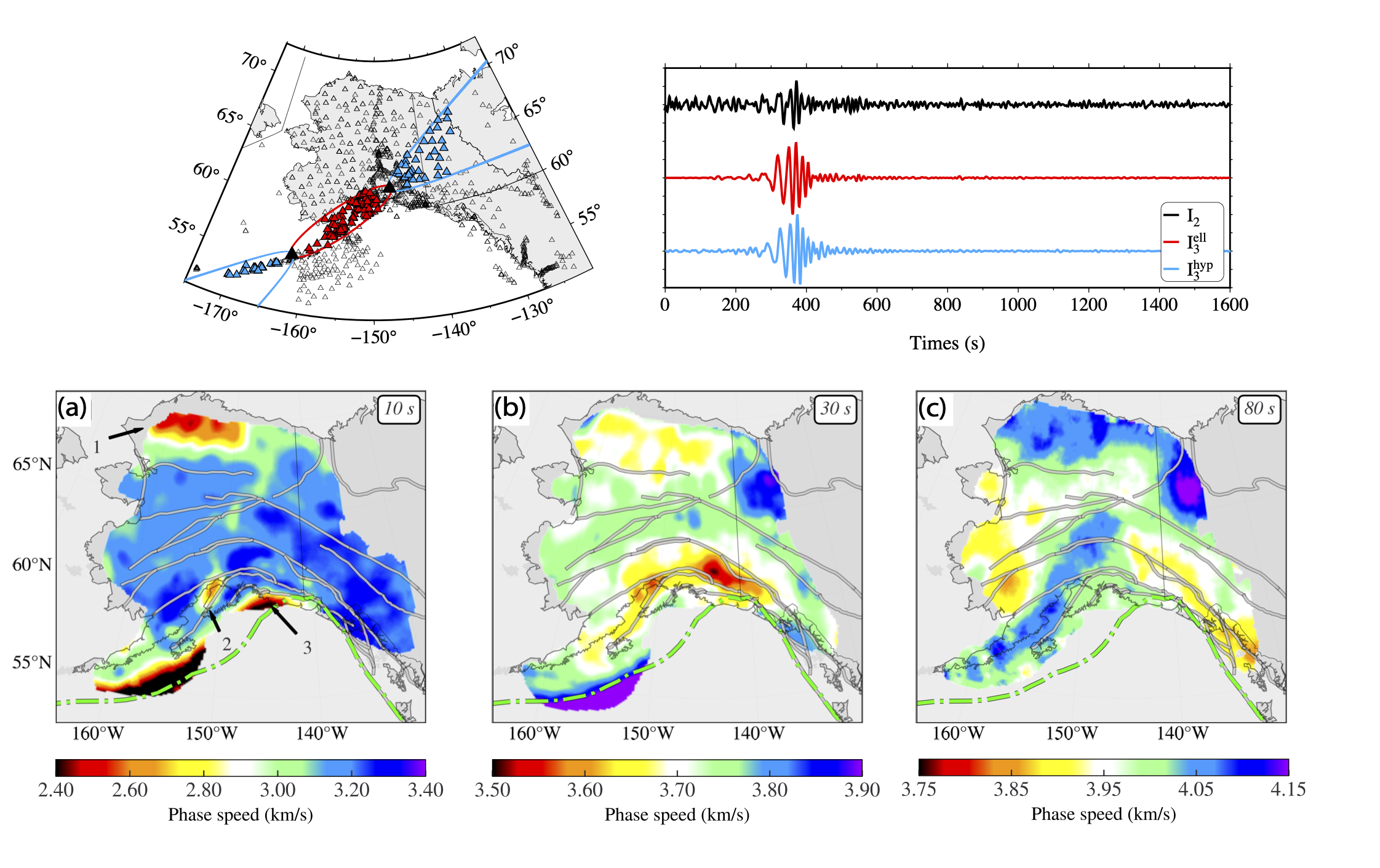
Three-station ambient noise interferometry is a powerful technique to extract surface wave dispersion and improve seismic anisotropy imaging. This method enhances resolution in remote regions like Alaska and the Aleutian subduction zone.
3.2 Direct Inversion for Azimuthal Anisotropy
Direct inversion techniques allow for a more accurate estimation of azimuthal anisotropy from surface wave dispersion. These methods contribute to refining models of upper mantle flow and deformation patterns.
📄 Read more in my Publications.